Tasting Flights
A Journey Across Generations
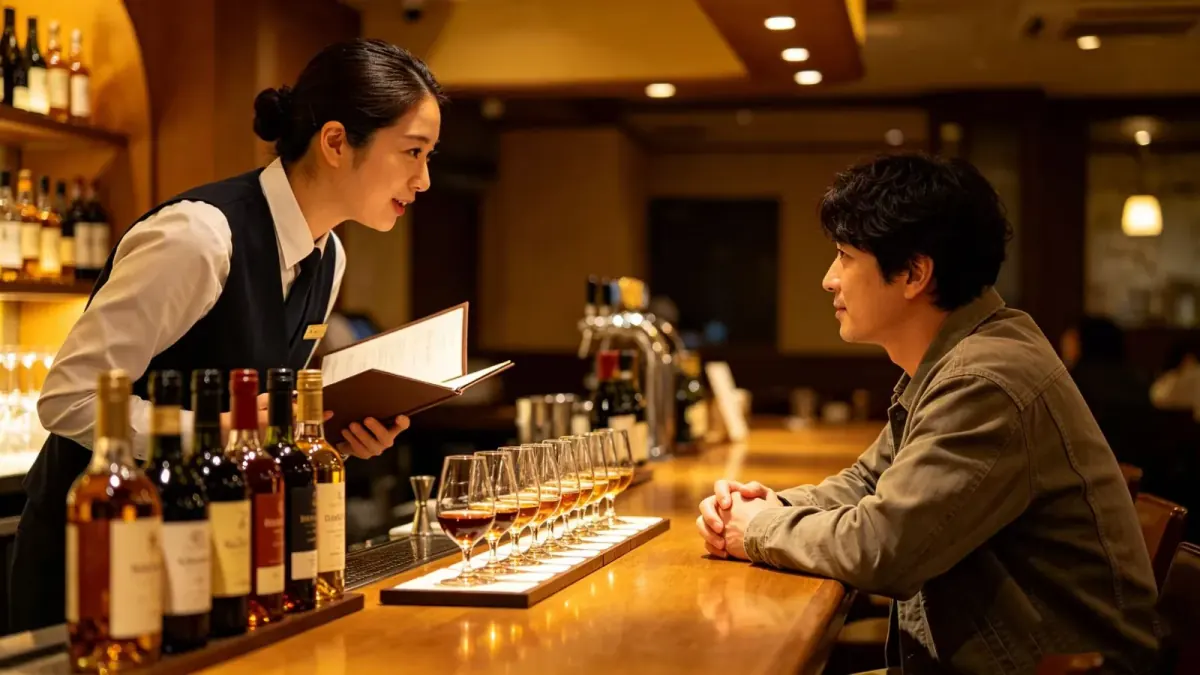
Each flight is designed as a guided comparison across eras, styles, and distilleries—not simply as a collection of old or rare bottles. Historical references, modern expressions, and carefully selected contrast pours reveal how Japanese whisky has evolved.
An optional final pour is available for guests who wish to take the journey one step further.
Explore our tasting philosophy
For us, heritage means more than age or rarity. It means understanding where Japanese whisky came from, how it developed, how it flourished, how it declined, and how it was revived. It means tracing both the horizontal stories across distilleries and styles, and the vertical stories that unfold across time.
This is why our flights are built not only around bottles, but around origins, lineages, transitions, and continuity.
THEME 01
Blending Artistry
Hibiki — Echoes of Time
The art of blending, shaped by time into harmony. A route through the layered world of Hibiki and Suntory blending — from vintage Hibiki NAS, Gold Label, and Gold Foil, to older 17-year expressions and Imperial. This flight reveals the quiet depth, balance, and accumulated elegance of Japanese premium blending.
approx. 45–75 min
Show bottle details
Click to collapse
Regular
Vintage Hibiki NAS
This vintage Hibiki NAS is often the starting point for understanding the old Hibiki style. Soft, rounded, and delicately balanced, it opens with ripe fruit, honey, and gentle wood tones, making it an ideal introduction to the vintage Hibiki journey.
Vintage Hibiki Gold Label
The vintage Hibiki Gold Label shows a more graceful and polished side of old Hibiki. Floral aromas, ripe fruit, honey, and soft oak come together in a poised, elegant profile that reflects the refined luxury of classic Japanese blended whisky.
Vintage Hibiki Gold Foil
The vintage Hibiki Gold Label with gold flakes offers more than visual beauty. It captures the celebratory and collectible character of the old Hibiki era, with a delicate palate of ripe fruit, honey, and refined oak that leaves a memorable impression both in appearance and taste.
Vintage Hibiki 17 Year Old
Vintage Hibiki 17 Year Old represents a deeper and more mature expression of old Hibiki. Layers of dried fruit, honey, spice, and fine wood unfold with greater complexity and a longer finish, making it one of the most iconic bottles for collectors and vintage whisky lovers.
Suntory Imperial
Suntory Imperial stands as one of the classic symbols of Suntory’s premium blended whisky era. Rich, stately, and old-fashioned in the best sense, it often shows sherried sweetness, mature fruit, spice, and dignified depth. If Hibiki expresses refinement and harmony, Imperial speaks more of weight, heritage, and grandeur.
Book this theme
THEME 02
Version Evolution
Yamazaki 12 — A Century in One Lineage
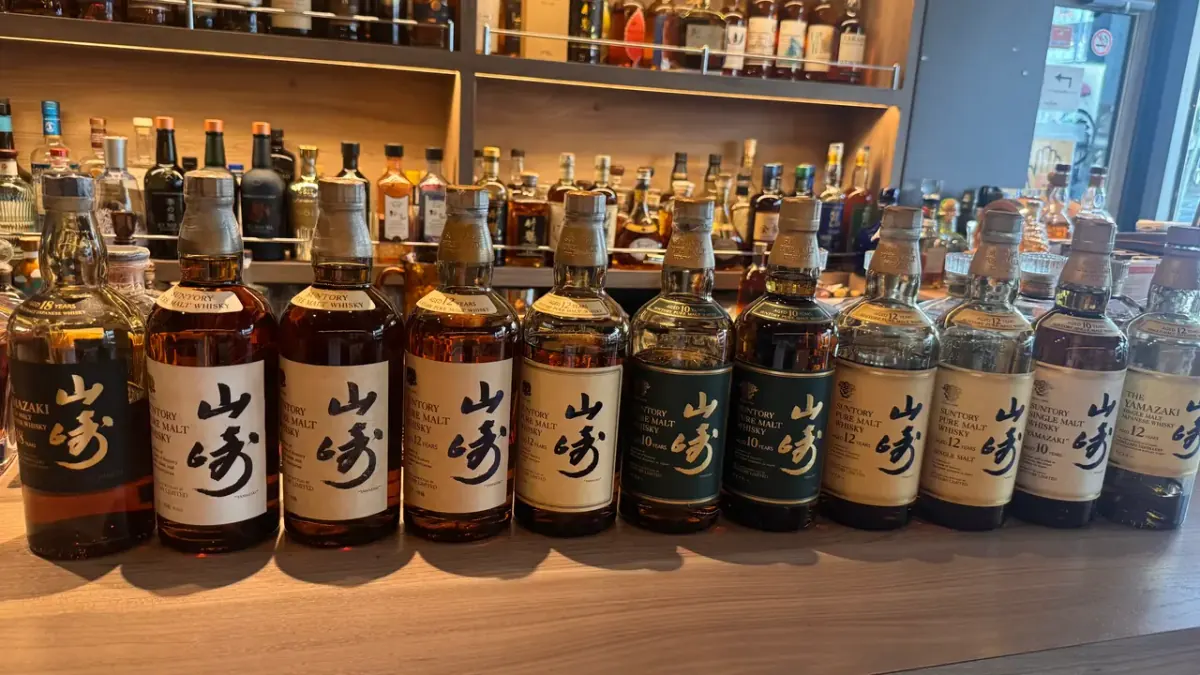
From the first Yamazaki to Yamazaki 12, tracing a century of Japanese single malt. A timeline of Yamazaki 12 across generations: transitional labels, Pure Malt bottlings, Green Label 10 Year, Lion Crest vintage bottle (without Tokkyu), and Lion Crest vintage bottle (Tokkyu). This route shows how one of Japan's most iconic single malts evolved through label, era, market perception, and bottle generation.
approx. 45–75 min
Show bottle details
Click to collapse
Regular
Yamazaki 12 Year Old, transitional vintage bottle
Yamazaki 12 Year Old, transitional vintage bottle. A bridge between eras, carrying both vintage bottle character and historical significance.
Yamazaki 12 Year Old, Pure Malt vintage bottle
Yamazaki 12 Year Old, Pure Malt vintage bottle. A more mature old-style release with notable depth, collectibility, and drinking appeal.
Yamazaki 10 Year Old, Green Label vintage bottle
Yamazaki 10 Year Old, Green Label vintage bottle. A rare and iconic vintage bottle, representing one of the most classic chapters in Yamazaki’s history.
Yamazaki 12 Year Old, Lion Crest vintage bottle (without Tokkyu)
Yamazaki 12 Year Old, Lion Crest vintage bottle, without Tokkyu marking. An early-style release with strong identity, high rarity, and distinctive historical appeal.
Yamazaki 12 Year Old Lion Crest vintage bottle
(Tokkyu)
This is one of the most iconic early bottlings of Yamazaki 12, featuring the rare "facing lions" label and the former Japanese "Tokkyu" premium-grade classification. Compared with the current Yamazaki 12, this vintage bottle shows a deeper old-style Suntory profile: richer body, mature fruit, gentle oak, and a distinctly Showa-era texture. It is not merely a glass of Yamazaki 12, but a historical snapshot of Japanese whisky before it became a global luxury category.
Premium
Old Cask Finished, Bamboo Charcoal Filtered
“Old Cask Finished” is an experimental Suntory Pure Malt expression from an earlier era. The whisky was filtered through bamboo charcoal and then finished in old sherry casks, giving it a clean, mellow profile with subtle smoke and sherry sweetness.
Book this theme
THEME 03
Blended Malt Evolution
Nikka — One Flower, Five Leaves
A Scottish seed of whisky tradition, flowering in northern Japan. Nikka is a story of Scotch tradition transplanted to Japan and flowering into multiple branches: Yoichi’s coastal strength, Miyagikyo’s gentle fruit, From the Barrel’s power, Super Nikka’s blended tradition, Maltbase structure, and the mature arc of Taketsuru. This route explores Nikka not as a single style, but as a living system of distilleries, blends, and old bottles.
approx. 45–75 min
Show bottle details
Click to collapse
Regular
Black Taketsuru, discontinued
Black Taketsuru, discontinued release. One of the most representative discontinued Nikka expressions in recent years, valued for both rarity and recognition.
Distillery limited black-label, vintage bottle
Distillery limited black-label vintage bottle. A compact yet highly representative release, standing out as a rare expression from Nikka’s distillery-limited range.
Super Premium, vintage bottle
Super Premium, vintage bottle. A richer and more polished upper-tier expression from Nikka’s classic blending tradition.
Super Nikka 15 Year Old, vintage bottle
A mature expression from the Super Nikka lineage, bridging Nikka’s familiar blended whisky tradition with greater depth and age. This vintage 15-year-old bottle reveals a more composed and layered side of Nikka: gentle malt sweetness, rounded oak, soft fruit, and the quiet strength of Japanese blending.
The Blend of Nikka Maltbase Whisky 17, vintage bottle
The Blend of Nikka Maltbase Whisky 17, vintage bottle. A mature and full-bodied expression with the classic character of old-style Nikka malt blending.
Premium
Tsuru White Porcelain Bottle (Vintage Bottle)
- Background
- The Tsuru line has always symbolized Nikka’s pinnacle blending; the white porcelain bottle adds decorative and collector value.
- Flavor
- Yoichi’s gentle peat blended with Miyagikyo’s fruity sweetness — round and silky, with honey, ripe fruit, and understated wood.
- Positioning
- A Showa-era classic. Every pour feels like touching the height of Nikka’s blending history.
Book this theme
First Resolve, Lifelong Devotion ~ Taketsuru
From Masataka Taketsuru's studies in Scotland to the creation of Yoichi and Miyagikyo, Taketsuru represents both the origin of Japanese whisky and the transmission of Nikka's founding spirit. Taketsuru Pure Malt combines Yoichi's weight and smoke, Miyagikyo's softness and fruit, and Nikka's blending philosophy. This is not simply an age-statement vertical. From the current white label and discontinued black label to the 12, 17 and 21 Year Old releases, the flight follows how the character of Nikka's two malt distilleries changes through maturation and formulation, while the Miyagikyo 10th Anniversary old bottle reveals the other source behind Taketsuru.
approx. 45–75 min
Show bottle details
Click to collapse
Regular
Current White-Label Taketsuru
Released on 31 March 2020 as the current reformulation. More modern and clearly defined than the black label, it combines fruit, substantial malt and gentle peat, finishing with slight dark-chocolate bitterness and wood.
Discontinued Black-Label Taketsuru
The NAS Taketsuru sold before the white-label reformulation and replaced in March 2020. It is more old-fashioned and rounded, integrating fruit, malty sweetness, vanilla-toned cask aromas and gentle smoke in a smooth palate.
Taketsuru 12 Year Old
Introduced in 2000 as the first age-statement Taketsuru and discontinued around 2014 in favour of the NAS release. Light and elegant, it emphasizes bright fruit, gentle malt sweetness, balance and drinkability.
Taketsuru 17 Year Old
Discontinued at the end of March 2020 and not restored as a regular product. Mature fruit, honey, vanilla, aged wood, light peat and gentle smoke combine in one of the clearest expressions of balance in the range.
Taketsuru 21 Year Old
Also discontinued at the end of March 2020 and not restored as a regular product. Deeper, softer and more complex, with ripe fruit, dried fruit, honey, wood, dark chocolate, light smoke and a long finish.
Premium
Miyagikyo 10th Anniversary Old Bottle - Taketsuru Commemorative Upgrade Comparison
Completed in 1969, Miyagikyo was the second Nikka distillery established by Masataka Taketsuru, intended to produce softer, fruitier malt whisky suited to blending. Its tenth anniversary in 1979 coincided with Taketsuru's death. This old bottle concentrates Miyagikyo's delicate fruit, soft body and old-fashioned Nikka elegance, making the blending philosophy behind Taketsuru Pure Malt tangible in the glass.
Book this theme
THEME 05
Craft Distillery
Chichibu — A Living Lineage
From the memory of Hanyu to the living future of Chichibu, Japanese craft whisky continues to grow. Chichibu represents the new generation of Japanese craft whisky: small-scale, highly regarded, still developing, and full of future possibility. From the memory of Hanyu to the emergence of Chichibu and its expanding distillery story, this route points toward the unfinished future of Japanese whisky.
approx. 45–75 min
Show bottle details
Click to collapse
Regular
White Leaf
White Leaf. A delicate and pure expression, standing as one of the early hallmark releases in the Hanyu–Chichibu lineage.
Black Leaf
Black Leaf. A deeper and more concentrated expression that highlights the bold character of early Ichiro’s Malt.
Blue Leaf
Blue Leaf. A classic Leaf Series release with strong balance and layered complexity.
Green Leaf
Green Leaf. A fresher and more lively expression, representing an important facet of early Chichibu spirit character.
Red Leaf
Red Leaf. A fuller and more assertive release, standing out strongly within the Leaf Series.
Gold Leaf
Gold Leaf. A more opulent and elevated expression, widely regarded as one of the signature releases of the Leaf Series.
Premium
20th Anniversary Edition
20th Anniversary Edition. Created to mark a major milestone, this release offers strong narrative value, collectibility, and symbolic significance.
Chichibu Second Distillery Single Malt
Chichibu Second Distillery Single Malt. A symbolic release marking the next phase of Chichibu, reflecting both continuity and expansion in the new distillery era.
Book this theme
Akkeshi — 24 Solar Terms by the Frigid Sea
Sea mist, frigid coastal air, and the 24 solar terms of eastern Hokkaido, expressed in whisky. Akkeshi speaks through place and season. Each release in the 24 Solar Terms series reflects a traditional calendar node, shaped by Hokkaido’s oceanic climate, sea air, peat, humidity, and cold coastal maturation. This route is a present-tense expression of terroir — whisky as climate, season, and place in the glass.
approx. 45–75 min
Show bottle details
Click to collapse
Regular
Kokuu (Grain Rain)
- Background
- The sixth release in the series, evoking spring rains that nourish all living things.
- Flavor
- Citrus, honey, malty sweetness, and gentle peat, with sea salt and oak providing a balanced structure.
- Positioning
- Hokkaido oceanic maturation delivers a fresh, elegant spring style.
Rikka (Start of Summer)
- Background
- The seventh release, marking the beginning of summer.
- Flavor
- Citrus, honey, light peat, and a sea breeze quality. Refreshing and balanced overall.
- Positioning
- A crisp summer expression shaped by the oceanic maturing climate.
Risshu (Start of Autumn)
- Background
- The thirteenth release, marking the arrival of autumn.
- Flavor
- Ripe fruit, honey, oak, and a hint of peat. Substantial and well-balanced in structure.
- Positioning
- A single malt expression that embodies the ripe, full character of autumn.
Tôji (Winter Solstice)
- Background
- The twenty-second release, evoking the longest night of the year.
- Flavor
- Rich and full-bodied, with dark chocolate, dried fruit, peat smoke, and sea salt. Deep and complex in structure.
- Positioning
- One of the heaviest, most wintry expressions in the Akkeshi series.
Shôkan (Minor Cold)
- Background
- The twenty-third release, marking the onset of deep winter.
- Flavor
- Sea salt, peaty smoke, honey, and citrus — substantial and complex in character.
- Positioning
- A defining expression of Hokkaido’s oceanic climate and peated distillery style.
Book this theme
THEME 07
Regional Terroir
Fireworks Between Mountain and Sea ~ SAB.
Toyama, blue seas, evening skies and smoke: SAB. expresses Hokuriku's landscape and sensory colours through blending. Snow White, Sunset Red, Night Black, Dark Black and Ocean Blue unfold like fireworks between mountain and sea, moving from cool delicacy and sweetness to spice, darkness and maritime depth. Compared with the single malt and collectable orientation of the Tarot Series, SAB. is a more accessible entry into Saburomaru and is particularly well suited to highballs. This flight shows how the distillery converts its core smoky style into approachable yet distinctive blended whisky.
approx. 45–75 min
Show bottle details
Click to collapse
Regular
Snow White
Fresh and delicate, with white chocolate, mineral and seaweed notes.
Sunset Red
Rounded and sweet, with orange, caramel, red apple and gentle smoke.
Night Black
Firm and spicy, led by burning wood, black pepper and earthy peat.
Dark Black
Building on NIGHT BLACK, deeper Spanish-oak character creates darker, more concentrated smoke.
Ocean Blue
The fullest-bodied release, combining powerful peat, honeyed apple, ash and seaweed in a dark maritime profile.
Premium
HYAKUSEI FUMA “LESS IS MORE”
HYAKUSEI FUMA is RUDDER's limited series commemorating roughly 100 years of Japanese whisky. Its tenth release, “LESS IS MORE,” was blended by Saburomaru around a key malt distilled in 2018, the final vintage from the former modified still. It also includes Scottish peated malt aged at least five years and sherry-cask malt aged at least seven years, followed by three more years of maturation at Saburomaru. Woodier, peatier and more mature than SAB., it shows stewed apple, ripe banana, seaweed, tobacco, tar and a coffee-like finish.
Book this theme
THEME 08
Bronze Distillation
The Order Beneath Impermanence ~ Saburomaru Tarot
From the small stills of a traditional sake brewery to ZEMON, the copper-tin alloy cast still that began full operation in 2019, the Saburomaru Tarot Series records more than bottle numbers and the sequence of the Major Arcana. It traces the distillery's passage through a major technological transition. Each release reflects a particular distillation vintage and stage of experimentation: standard-strength editions emphasize balance and maturation, while cask-strength editions retain more direct spirit power. III THE EMPRESS won Gold at TWSC 2024; IV THE EMPEROR and V THE HIEROPHANT won Gold at TWSC 2025; and IV THE EMPEROR Cask Strength received the top award in the Japanese single malt small-batch category at WWA 2025.
approx. 45–75 min
Show bottle details
Click to collapse
Regular
VIII THE STRENGTH
Made with Islay 80 ppm super-heavily peated malt, this is the Tarot release with the strongest maritime character and smoke. The 48% edition is relatively smooth, with vanilla, Japanese bekko candy and grapefruit pith.
VII THE CHARIOT
Made with Highland 80 ppm super-heavily peated malt, this is one of Saburomaru's most intensely peated releases. Burning wood, ash, fern, orange peel, ripe red apple and ginger lead into dense ashy peat and a powerful smoke-laden finish.
VI THE LOVERS
Using spirit distilled in 2020 and 2021, it combines Highland peat with Islay peat. Sweetness, smoke, spice and jerky-like savouriness overlap in a richer, more complex Saburomaru.
V THE HIEROPHANT
Distilled in 2021. Although still heavily peated, it is not driven by raw power; maritime savouriness, malt sweetness and restrained smoke remain in balance.
IV THE EMPEROR
Distilled in 2020 with Highland heavily peated malt. Compared with the Islay-derived minerality of III, IV places greater emphasis on balance and structure, combining delicate fruit with a firm smoky framework.
Premium
III THE EMPRESS
Distilled in 2020, this was the first Tarot release to clearly express an Islay-influenced peat character. Fresh oak, vanilla, dry peat, Japanese pear and pineapple meet slight salinity, powerful smoke, gentle sweetness and minerality. It is a key release for understanding “Islay peat × ZEMON distillation.”
Book this theme
Spirit of the Forest — Hakushu
In 1973, Suntory established the Hakushu Distillery at the foot of the Southern Japanese Alps. Forests, pristine natural water, and a production environment distinct from Yamazaki shaped Hakushu’s fresh, light, gently smoky character. This flight moves from modern Hakushu through historical distillery bottlings to age-stated releases, tracing how the “forest” unfolds over time.
approx. 45–75 min
Show bottle details
Click to collapse
Regular
Hakushu NAS
Fresh · Light · Delicate smoke
Sudachi citrus and mint-like freshness, a light palate, and a finish of gentle smoke and sweetness. The benchmark for modern Hakushu.
Hakushu Distillery Limited
Rich · Aromatic · Gently bitter
A distillery-exclusive bottling. Richer than the current Hakushu, with a fuller aromatic body and a distinct but pleasant bitterness.
Hakushu East Distillery Limited
Fruity · Creamy · Toasted · Full-bodied
A historical style shaped by special yeast, wooden-vat fermentation, and direct-fire distillation. Beneath the fruit and cream are toasted notes and a fuller body.
Hakushu 12
Green apple · Jasmine · Clean smoke
Leafy freshness gradually develops into ripe fruit and gentle sweetness, with smoke becoming finer and more persistent.
Hakushu 18
Ripe fruit · Honey · Smoke · Long finish
Long maturation brings deep fruit sweetness, greater complexity, and an extended smoky finish, taking the forest character into maturity and depth.
Book this theme
The Art of Blending — Nikka Tsuru
“Tsuru” was introduced in 1976 and named for Masataka Taketsuru. It is an important lineage in Nikka’s premium blended whisky history. From the early ceramic bottle and Slim Bottle to the current distillery-exclusive NAS and the 17 Year Old, the flight closes with an old Miyagikyo commemorative bottle to show how Nikka has reinterpreted the “art of blending” across different eras.
approx. 45–75 min
Show bottle details
Click to collapse
Regular
Tsuru Ceramic Bottle
Classical · Weighty · Mature · Balanced
An early premium bottling. Mature fruit, sweetness, wood, and gentle smoke overlap, providing a historical reference point for old-style Tsuru.
Tsuru Slim Bottle
Round · Fruity · Soft · Balanced
Continuing the premium blended lineage, it is clearer and lighter than the ceramic bottle—a transition from classical Tsuru toward a more modern expression.
Tsuru NAS Distillery Limited
Floral · Soft · Sweet · Modern blend
The current distillery-exclusive version, re-expressing Tsuru’s blending aesthetic with Nikka’s present-day stocks.
Tsuru 17
Mature fruit · Rich · Deep · Long
Whiskies matured for at least 17 years bring greater ripeness, weight, and depth while retaining Tsuru’s core of complete harmony.
Miyagikyo 10-Year Commemorative Old Bottle
Fruity · Malty · Soft · Historical commemorative
The flight ends at Miyagikyo, the distillery built by Masataka Taketsuru himself: from a finished blended whisky back to one of the key sources and the founder behind the Nikka system.
Book this theme
THEME 11
Two Distilleries
Origins of Nikka — Two Distilleries
Nikka rests on two malt distilleries with sharply different personalities: Yoichi is weighty, forceful, and smoky; Miyagikyo is soft, elegant, and fruit-driven. This flight compares NAS with 10-year expressions from each, then reunites the two paths in the discontinued black-label Taketsuru.
approx. 45–75 min
Show bottle details
Click to collapse
Regular
Miyagikyo NAS
Fruit · Flowers · Soft · Refined
Apple, pear, and delicate sweetness establish the benchmark coordinates of modern Miyagikyo.
Miyagikyo 10 Year Old
Ripe fruit · Sweetness · Round · Mature
A discontinued age-stated release. Ten years of maturation turn fresh fruit into rounder, more mature sweetness and deeper cask layers.
Yoichi NAS
Weighty · Malty · Smoky · Powerful
Coal-fired direct distillation creates a distinct personality. Compared with Miyagikyo, the body is heavier and more forceful, with malt, fruit, and smoke.
Yoichi 10 Year Old
Ripe fruit · Weighty · Smoky · Long
Maturation adds ripe fruit, sweetness, and woody layers while preserving Yoichi’s power and smoky character.
Discontinued Black-Label Taketsuru
Integrated · Mellow · Fruity · Balanced
Pure Malt brings different Nikka malt whiskies back together. After tasting the two distilleries separately, return to the blend and look for their traces within it.
Book this theme
Cloud Sea of the Sacred Mountain — Fuji
Fuji Gotemba Distillery was established in 1973 and can produce both malt whisky and multiple styles of grain whisky. To understand Fuji, Single Malt alone is not enough: Malt, Grain, and Blended Whisky need to be taken apart and assembled again.
approx. 45–75 min
Show bottle details
Click to collapse
Regular
Fuji Unkai
An earlier Fuji Gotemba-line product that takes the timeline back to before the modern “Fuji” brand was fully formed.
Distillery Limited Pure Malt
Malty · Rich · Round · Limited
A combination of malt whiskies presenting the Gotemba style, forming the first comparison with today’s Single Malt.
Fuji Single Malt
Fruity · Honeyed · Soft · Clear
Soft fruit, sweetness, and a clean body provide the benchmark for modern Gotemba malt.
Distillery Limited Single Grain
Sweet · Round · Rich · Limited
Grain whisky, normally made to serve blending, is brought to center stage to demonstrate the full breadth of Gotemba’s grain-whisky capability.
Fuji Single Grain
Sweet · Delicate · Round · Long
The current Single Grain benchmark, forming the second comparison with the distillery-exclusive version.
Fuji-Sanroku
Integrated · Weighty · Sweet · Balanced
Finally, return to Blended Whisky: first separate Malt and Grain, then taste how they come back together in a glass of Fuji.
Book this theme
Five Lights, One Source — MARS
MARS whisky is not a single straight line fixed to one place. Komagatake and Tsunuki provide northern and southern distillation styles, while different maturation sites add climate as another variable. This flight moves from “where it is distilled” to “where it is matured.”
approx. 45–75 min
Show bottle details
Click to collapse
Regular
Komagatake Edition 2023
Shinshu distillation × Shinshu maturation
Fruit, sweetness, and a delicate body establish Komagatake’s Shinshu benchmark.
Tsunuki Edition 2022
Tsunuki distillation × Tsunuki maturation
Moving from Nagano to Kagoshima, a richer and more forceful southern character establishes the second coordinate.
Tsunuki Distillery 6th Anniversary 52%
Rich · Powerful · High intensity
The higher strength concentrates Tsunuki’s body, aroma, and spirit power—a high-resolution view of the Tsunuki style.
Komagatake Single Cask Calvados Cask · Shinshu Maturation
The variables are narrowed to a single cask and a Calvados cask, magnifying how apple, fruit, and oak shape the Komagatake spirit.
Komagatake Single Cask Musashiya · Yakushima Maturation
Tropical maturation · Single cask · Climate variable
The Komagatake spirit remains the same, but maturation moves to warm, humid Yakushima. Placed beside Shinshu maturation, it lets us observe directly how climate changes spirit from the same origin.
Book this theme
THEME 14
The Unseen Suntory
Between Light and Shadow — The Unseen Suntory
Beyond Yamazaki, Hakushu, and Hibiki, Suntory left behind many discontinued, reformulated, and special releases. “Between Light and Shadow” places these bottles, now obscured by the current portfolio, side by side and asks: before today’s order took shape, how did Suntory understand premium whisky?
approx. 45–75 min
Show bottle details
Click to collapse
Regular
Suntory Pure Malt 8 Year Old
Pure Malt · 8 years · Old bottle · A vanished category
Pure Malt has largely disappeared from the mainstream portfolio. This 8-year-old bottling preserves another historical expression of Suntory malt whisky.
Kofuru Shiage / Ancient Cask Finish
Bamboo-charcoal filtration · Old-cask finishing · Elegant · Long
After bamboo-charcoal filtration, the whisky is further finished in old casks. The body is soft, with wood and aroma stretching out gracefully—an almost vanished branch of production history.
Nazo (2005 · Harutoshi Fukui)
Limited project · Culture · Work of its era
Connected with Harutoshi Fukui and a special 2005 project. It does not need to be forced into Yamazaki, Hakushu, or Hibiki; it belongs to a particular moment in time.
1899 Founding
Founding commemoration · Premium blend · Historical symbol
Named for the year Shinjiro Torii founded the business, it shows another way—outside Hibiki—in which Suntory once expressed premium blended whisky and its own history.
President’s Choice
Non-commercial lineage · Top-tier blend · Rare
Both non-commercial and retail versions once existed, representing a world of premium blending beyond ordinary mass-market products. Placed beside 1899, it reveals a summit later obscured by today’s brand hierarchy.
Book this theme
THEME 15
The Lost Distillery
Karuizawa — The Lost Distillery
Karuizawa is one of the most representative closed distilleries in Japanese whisky. A discontinued product can be recreated; spirit from a vanished distillery cannot be produced again from the same source. Rather than centering auction prices, this flight moves from a flagship blend to a 12-year Single Malt and then 16- and 20-year cask-strength spirit, rebuilding Karuizawa’s historical and sensory coordinates.
approx. 45–75 min
Show bottle details
Click to collapse
Regular
Asami
Flagship blend · Dedicated bottle design · Elegant and lingering
Born in the era when Sanraku Ocean owned both Karuizawa Malt and Kawasaki Grain. A pronounced sherry profile unfolds with restraint: dried fruit, sweetness, and mature wood emerge slowly, while the most striking feature is the exceptionally long and elegant residual aroma.
Karuizawa 12
Old leather · Old wood · Old books · Exceptionally long residual aroma
Like entering a study sealed for many years: leather, wood, and paper overlap. Even after more than 12 hours, the empty glass retains a faint, distant fragrance.
Karuizawa 16Year Old Cask-Strength Spirit
63.6% · Explosive sherry · High concentration
16years × 63.6%: dense sherry, ripe fruit, wood, and alcohol power erupt at once, showing Karuizawa at extreme intensity.
Karuizawa 20 Year Old Cask-Strength Spirit
58.1% · Sherry impact · Deep · Long
It retains enormous impact while adding depth and extension. The 16-year is an explosion; the 20-year leaves a much longer wake after the impact. From the elegance of Asami to the almost violent sherry of the cask-strength spirits, one hidden thread runs through all four glasses: the lingering aroma.
Book this theme
The Guangling Encounter — Ichigo Ichie
Some whiskies can wait; others belong to a single encounter. Single casks are consumed, old bottles only diminish, and spirit from closed distilleries can never be reborn. “The Guangling Encounter” collects not rarity for its own sake, but slices of time that cannot be perfectly reproduced.
approx. 45–75 min
Show bottle details
Click to collapse
Regular
Chita Distillery Special Selection
12+ year Grain · Continuous distillation · Soft and clean
Selected Grain whiskies matured for at least 12 years. Soft, round, richly sweet, and clean on the finish—one glass for understanding the “base color” of Suntory’s blending system.
Yamazaki Distillery Hizō Malt
Distilled 1985 · Straight Head Pot Still · Omi maturation
Distilled at Yamazaki in 1985 and matured long-term in Building 58 of the Omi Aging Cellar. Elegant and complex, fruity and smooth, gently sweet and substantial, with a complete record of the spirit’s provenance.
Hakushu Distillery Hizō Malt
Hakushu East · 1984 · Wooden-vat fermentation · Direct-fire distillation · Sherry Cask 1984 Hakushu East spirit: wooden-vat fermentation, direct-fire distillation, sherry cask, and maturation at Yatsugatake. Sweet and elegant, with vanilla-like woody sweetness and a toasted finish, preserving a historical slice of the “Hakushu East” era.
Yamazaki 15 Year Old Cask-Strength Spirit
15 years · 56% · Yamazaki
At 56% ABV, it presents the aroma, oily texture, woody structure, and power of mature Yamazaki spirit directly.
Hakushu 15 Year Old Cask-Strength Spirit
15 years · 56% · Hakushu
Like Yamazaki, it is 15 years old and 56%. With age and strength controlled, the most important remaining variable is the distillery itself—a rare Yamazaki × Hakushu comparison.
Book this theme
THEME 17–20
Before the Name
History had already begun before the names were fixed. “Before the Name” follows the prehistories of Fuji, Chichibu, Akkeshi, and Saburomaru, returning to moments when today’s brands and styles had not yet fully taken shape.
Wind Rises at Gotemba — Before Fuji
In the 1970s, Kirin entered the whisky market, and Fuji Gotemba absorbed the production logic of Malt, Grain, and Blended Whisky from its birth. From early Kirin bottlings to Robert Brown, this flight traces where Gotemba began before “Fuji” became the Fuji we know today.
approx. 45–75 min
Show bottle details
Click to collapse
Regular
Emblem Tokkyu
One of Kirin’s early blended whiskies, preserving the product form of the early Gotemba system.
Crescent Tokkyu
Crescent from the era of Japan’s former “Tokkyu” liquor classification.
Crescent
The version after the “Tokkyu” designation was abolished. Tasted beside the previous glass, it shows the same product on either side of a regulatory change.
Robert Brown Ceramic Bottle
A representative Kirin blended whisky introduced in 1974. The ceramic presentation also preserves the form of premium gift whisky from the period.
JAL 100th Anniversary Ceramic Bottle
A Kirin-system commemorative ceramic whisky, showing another role of Japanese whisky as a high-end commemorative and gift product.
Book this theme
Golden Horse — Before Chichibu
Today’s Chichibu Distillery began in 2008, but the story reaches further back through Toa Shuzo, Golden Horse, and Hanyu. From Golden Horse blends to an early “Chichibu” Single Malt, this flight looks for the prelude to the later Hanyu and Chichibu story.
approx. 45–75 min
Show bottle details
Click to collapse
Regular
Golden Horse Blend, 1st Grade
42%. Delicate brown-sugar-water and honey-water sweetness, a light body, soft entry, and exceptionally comfortable drinkability.
Golden Horse Blend, Tokkyu
43%. Darker sweetness reminiscent of black-sugar water, fuller and richer than the 1st Grade; tasted together, the two glasses make the differences of grade and era immediately visible.
Golden Horse Precious
43%. Slightly sharp neat, then softer with water. Brown sugar, bourbon-cask notes, dried fruit, fruit candy, and a rum-like sugarcane character; later, sugarcane fiber and green-grass notes emerge. The residual aroma is sweet, elegant, and persistent.
Golden Horse Chichibu 8 Year Old Single Malt
A transition from blend to single malt. The “Chichibu” here is not the modern Chichibu Distillery established in 2008, but belongs to the earlier historical line of Golden Horse and Toa Shuzo.
Book this theme
First Ripples of the Vast Sea — Before Akkeshi
Akkeshi Distillery is located in Akkeshi, eastern Hokkaido, and began distillation in 2016. Its cool, humid maritime environment, together with Hokkaido barley, mizunara, peat, and different cask types, gradually formed its style. From 2018, the NEW BORN FOUNDATIONS documented the growth of the spirit; in 2020, Sarorunkamuy carried the story into a formal Single Malt, followed by the Twenty-Four Solar Terms series beginning with Kanro.
approx. 45–75 min
Show bottle details
Click to collapse
Regular
FOUNDATIONS 1
60%. Unpeated Malt × Bourbon Cask, 5–14 months. Lemon, nuts, and honey, with vanilla sweetness and coffee bitterness on the finish.
FOUNDATIONS 2
58%. 50 ppm peated Malt × Bourbon Cask, 8–17 months. Peat, citrus, light salinity, dark chocolate, and black pepper—the later Akkeshi identity begins to appear.
FOUNDATIONS 3
55%. Unpeated Malt × Hokkaido mizunara cask, 8–23 months. Brown sugar, vanilla, melon, nutmeg, and aromatic wood.
FOUNDATIONS 4
48%. Malt & Grain, 13–30 months, with Malt over 60% and a substantial proportion of sherry-cask whisky. Mandarin, raisins, banana, maple syrup, salted caramel, and dark chocolate.
Sarorunkamuy Single Malt
Akkeshi’s first Single Malt composed of whiskies matured for at least three years. The name comes from the Ainu language and refers to the red-crowned crane that inhabits wetlands. Here the experimental NEW BORN period crosses into the stage of mature Single Malt.
Book this theme
THEME 20
Before Saburomaru
First Chapter Under the Moon — Before Saburomaru
Wakatsuru Shuzo obtained a whisky production license in 1952. Moon Glow sits at the junction between old Wakatsuru and the new Saburomaru. All three bottles use precious Saburomaru Malt distilled in 1960, and received the highest Japan-area honor in their category at WWA 2018, 2019, and 2020 in three consecutive years.
approx. 45–75 min
Show bottle details
Click to collapse
Regular
Moon Glow First Release
1960 Malt × whiskies matured for 10+ years. Old cedar, hinoki cypress, orange, vanilla, and peat. WWA 2018 Japan-area Best Whisky.
Moon Glow 2018 Crescent
Wakatsuru Shuzo 100th anniversary release. 1960 Malt × Grain finished in Toyama mizunara; vanilla cream, smoke, peat, and chestnut. WWA 2019 Japan-area Best Whisky.
Moon Glow 2019 Half Moon
1960 Malt × whiskies matured for 10+ years × PX-cask marriage; red apple, caramel, honey, ash, and grape skin. WWA 2020 Japan-area Category Winner. First Release → Crescent → Half Moon. The moon waxes, and a new Saburomaru is taking shape.
Book this theme